
API Integration Services That Connect Your Business Systems
Our API Integration Services help businesses connect different software systems, streamline data exchange and reduce manual tracking workflows. Whether you need to connect existing applications or build new integrations, we develop solutions around how your business processes work.
What Can Our API Integration Services Connect?
Our API Integration Services can be tailored to different integration requirements across your business environment.
Business Application Integration
Connect business applications such as ERP, CRM, accounting and inventory management systems, allowing information to move between platforms without relying on repetitive manual updates.
E-Commerce & Payment Integration
Connect online stores, payment gateways and order management platforms to support the exchange of product, customer, transaction and order information across your business systems.
Database & Data Integration
Enable different applications to access, exchange and work with information from relevant databases, helping maintain consistency across connected systems.
Workflow & Process Automation
Reduce repetitive data entry and manual coordination by connecting applications that need to exchange information or trigger actions based on specific business events.
API Integration vs System Integration:
API integration and system integration are closely related, but they serve different purposes. Understanding the distinction can help businesses identify the right approach for connecting their applications.
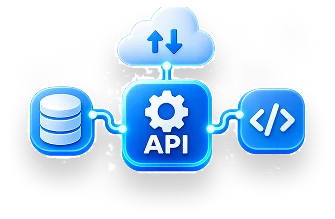
API Integration
- Connects applications through APIs
- Focuses on communication between software applications
- Commonly uses API endpoints and data exchange methods
- Suitable for connecting specific applications and services
- Can support real-time or scheduled data exchange
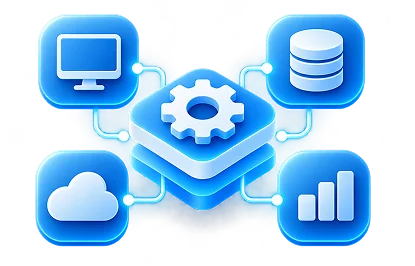
System Integration
- Brings multiple systems together into a connected environment
- Covers broader connections between applications, databases and infrastructure
- Can involve APIs, middleware, databases and other integration technologies
- Suitable for coordinating information across multiple business systems
- Can support broader business processes and information flows
Have Different Business Systems That Need to Work Together?
Whether you need to connect business applications, integrate third-party platforms or automate information exchange, Easy Outdesk can help develop an integration approach around your requirements.
Discuss Your Integration RequirementsGot Questions?
Frequently Asked Questions
API Integration Services involve connecting different software applications and platforms through application programming interfaces (APIs), allowing them to exchange information and interact with one another. Businesses use these services to connect applications, automate workflows and improve data accessibility.
Standard API integration typically uses available API capabilities to connect compatible applications. Custom API Integration involves developing or configuring connections around specific business requirements, including specialised workflows, data structures and application functionality.
API Integration can connect ERP, CRM, accounting, e-commerce, payment, inventory management and other business applications. The available integration options depend on the APIs, technical capabilities and access requirements of the systems involved.
Yes. System integration services can be planned around your existing applications, databases and platforms. The integration approach depends on how your systems communicate, their available interfaces and the information that needs to be exchanged.
Yes. API-based connections can support automated information exchange and trigger specific actions between applications. This can help reduce manual data entry, repetitive tasks and unnecessary coordination between different systems.
Applications without accessible APIs may still support integration through other methods, depending on their technical capabilities. These may include database connections, middleware, file-based data exchange or other supported interfaces. The appropriate approach depends on the application environment and integration requirements.
The timeline depends on the number of applications involved, integration complexity, data requirements, API availability and testing needs. Once the requirements are understood, the project scope and estimated timeline can be established.
The cost depends on the number of systems to be connected, integration methods, custom functionality, data exchange requirements and overall project complexity. A review of your existing environment helps establish the scope and provide an estimate.
Yes. Existing integrations can be reviewed to identify opportunities for improvements, additional connections, workflow changes or modifications to data exchange processes based on evolving business requirements.