
Custom Mobile App Development Services Built Around Your Business
We build custom mobile applications designed around specific user requirements, workflows and business processes, helping businesses provide intuitive mobile experiences across iOS and Android.
What Can Your Mobile Application Be Built to Do?
Custom mobile applications can be shaped around the way your users, customers or teams need to interact with your business.
Customer-Facing Mobile Applications
Build mobile apps that allow customers to interact with your services, explore products, manage bookings, access accounts, or engage with your brand through dedicated mobile experiences.
Internal Business Applications
Develop mobile apps for internal teams to complete tasks, track operational activities, manage approvals, and access business information while on the move.
E-Commerce & Service Applications
Enable customers to browse products, place orders, book services, track deliveries, and complete mobile payments through secure and intuitive shopping flows.
Workflow & Task Management Applications
Equip field teams, warehouse staff, or operational personnel with mobile tools to record updates, update status, complete checklists, and log activities in real time.
Real-Time Information & Data Access
Provide users with mobile access to live status updates, operational records, notifications, reports, and connected business data directly from their devices.
User-Specific Mobile Experiences
Tailor app navigation, features, and permissions for different user roles—such as customers, employees, partners, and vendors—within a single unified mobile solution.
Our Approach to Custom Mobile App Development
We follow a structured approach to mobile app development, ensuring the finished application meets your functional needs, user expectations and business objectives.
Understanding App Requirements
Define key app features, user journeys, target platforms, and business goals to shape the project scope.
Planning & Architecture Definition
Structure application data flows, UI wireframes, and backend requirements to support development.
User Experience & UI Design
Design responsive and engaging mobile interfaces that provide smooth and intuitive user journeys.
Application Development & Integration
Build robust mobile features, connect backend APIs, and integrate necessary third-party services and databases.
Testing & Quality Assurance
Conduct thorough functionality, performance, usability, and device compatibility testing.
Deployment & Post-Launch Support
Publish apps to Google Play & Apple App Store and provide ongoing maintenance and feature enhancements.
Native or Cross-Platform: Understanding the Differences
Choosing between native and cross-platform mobile development depends on your performance requirements, budget, project timeline and target user experience.
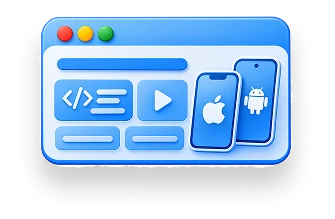
Native App Development
- Built specifically for iOS (Swift) or Android (Kotlin)
- Delivers optimal device performance and platform responsiveness
- Direct access to full device hardware and OS features
- Separate codebase for each platform (iOS and Android)
- Ideal for resource-intensive and high-performance apps
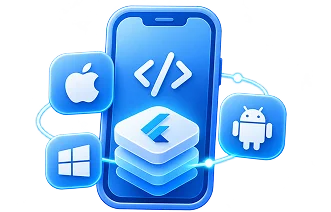
Cross-Platform App Development
- Single codebase that runs across both iOS and Android
- Faster development timeline and cost-effective delivery
- Consistent user experience and interface across platforms
- Easier to maintain and update features simultaneously
- Ideal for most business, utility, and content-driven mobile apps
The choice of approach also influences the mobile development tools, technologies and integration requirements involved in the project. Our focus is to identify an approach that aligns with your application's intended functionality and long-term requirements
Have a Mobile Application Idea?
Tell us about your app concept, target users and the features you need. Our team can help plan, design and build a mobile application tailored to your business requirements.
Discuss Your ApplicationGot Questions?
Frequently Asked Questions
Custom mobile app development services involve designing and building applications around specific business requirements, user needs and operational workflows. Unlike off-the-shelf applications, custom solutions are developed to support the functionality and experiences required by a particular business.
Yes. Mobile application development can be planned for Android, iOS or both platforms, depending on your target users, project requirements and preferred development approach.
The scope of app development can include customer-facing applications, internal business applications, e-commerce apps, service applications, workflow tools and applications designed around specific operational requirements.
Yes. A mobile application can be designed to connect with relevant business systems, databases and third-party services, depending on their technical capabilities and integration requirements.
The mobile development tools and technologies depend on the application requirements, target platforms and development approach. Common technologies include Android Studio and Xcode for native development, and Flutter, React Native and .NET MAUI for cross-platform applications.
The timeline depends on the application features, complexity, platform requirements, integrations and testing needs. Once the project requirements are understood, the development scope and estimated timeline can be established.
The cost depends on factors such as application functionality, number of platforms, design requirements, integrations and overall project complexity. A project assessment helps establish the scope and provide a suitable estimate.
Yes. Existing applications can be reviewed to identify opportunities for improvements, additional functionality, integration or changes based on evolving business requirements.